
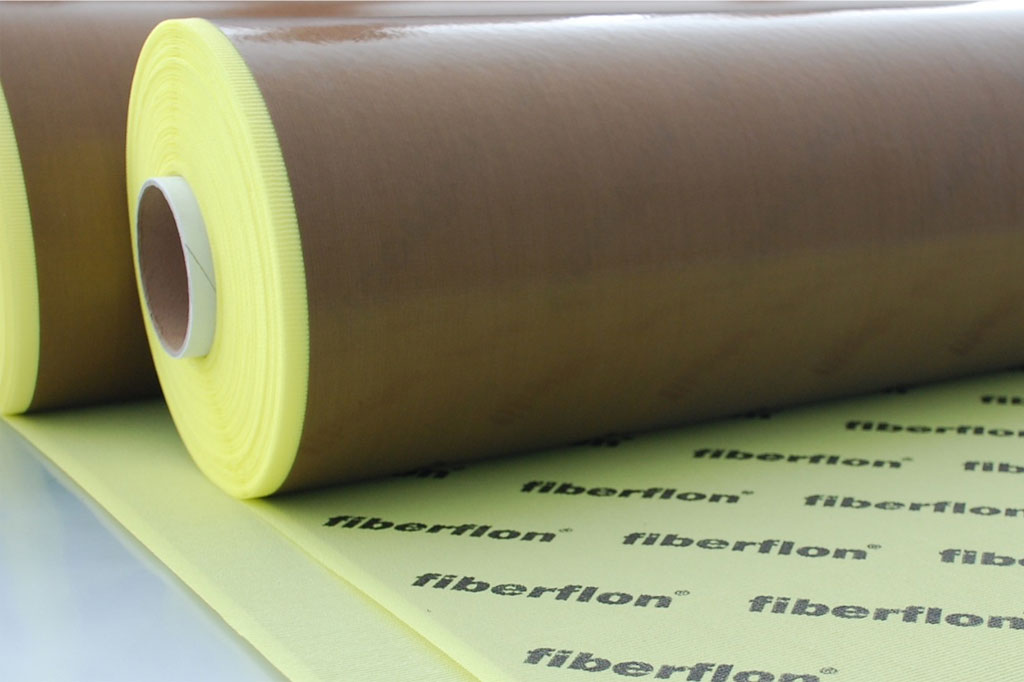
Despite their excellent properties, PTFE films are inherently challenging to bond due to their low surface energy and chemical inertness, which makes lamination techniques particularly important.
To maximize the performance of PTFE films, lamination is often employed to combine them with other substrates or enhance their structural integrity.
Purpose of PTFE Film Lamination
Lamination enhances PTFE film in several ways:
- Mechanical Strength – PTFE films are soft and flexible; lamination can increase dimensional stability.
- Functional Integration – Combining PTFE with other materials, such as metals, fabrics, or adhesives, can impart new functionalities.
- Electrical Insulation – Laminating PTFE with conductive layers helps create dielectric barriers for electronic applications.
- Thermal and Chemical Resistance – Multi-layer laminates can withstand extreme environments while maintaining core PTFE properties.
Common PTFE Film Lamination Techniques
1. Heat-Activated Lamination
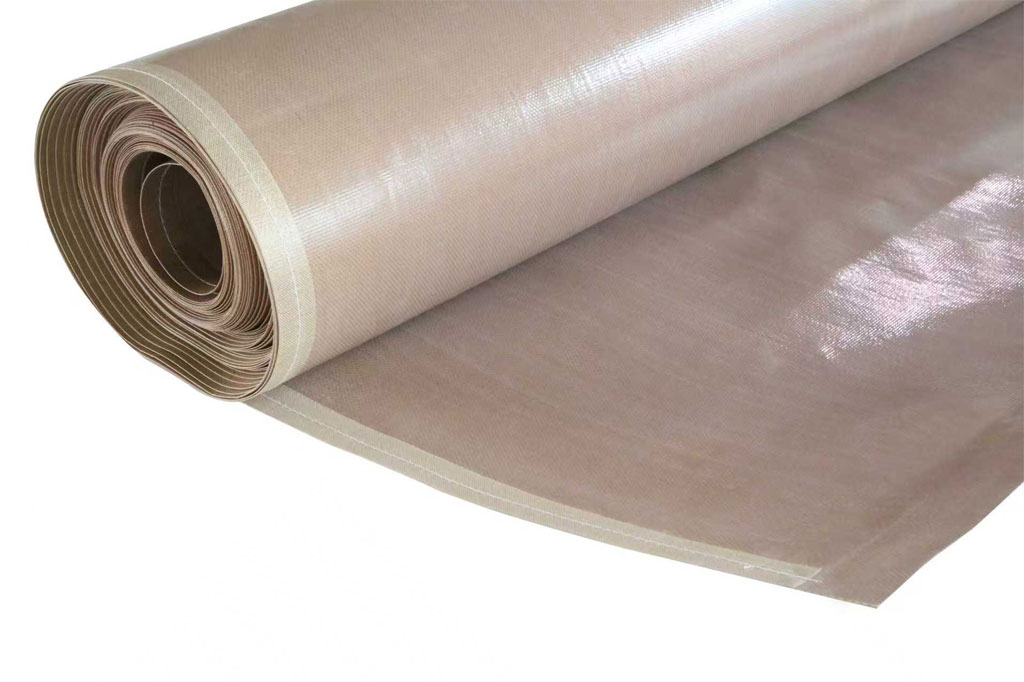
Heat-activated lamination, also called thermal lamination, is the most common method used for PTFE films. This technique involves applying heat and pressure to bond the PTFE film to a substrate with or without an adhesive layer.
Process Steps:
- Surface Preparation: PTFE’s low surface energy requires surface treatment like plasma etching or chemical etching to improve adhesion.
- Adhesive Application: Heat-activated adhesives—such as epoxy or silicone formulations—are applied directly to the substrate.
- Lamination: The PTFE film is placed over the adhesive-coated substrate and passed through a heated roller or press at temperatures ranging from 200°C to 350°C.
- Cooling: Controlled cooling ensures the bond solidifies without creating stress or wrinkles.
Advantages:
- High bonding strength with pre-treated surfaces.
- Suitable for thin and thick films.
- Compatible with continuous roll-to-roll lamination processes.
Applications:
- Electrical insulation tapes.
- High-temperature protective layers.
- Chemical-resistant linings.
2. Adhesive Lamination
Adhesive lamination is ideal for PTFE films when heat-sensitive substrates are involved. Here, pressure-sensitive or heat-curable adhesives are used to bond the PTFE film to another layer.
Process Steps:
- Surface Activation: PTFE film is pre-treated using chemical etching or plasma treatment.
- Adhesive Coating: A thin layer of adhesive is applied to either the PTFE film or the substrate.
- Bonding: Pressure is applied using rollers or presses at controlled temperatures, depending on the adhesive type.
Advantages:
- Allows lamination at lower temperatures, protecting delicate substrates.
- Flexible in terms of substrate compatibility.
- Uniform adhesive layer provides consistent bonding across the laminate.
Applications:
- Flexible printed circuit boards (FPCBs).
- Protective film for machinery components.
- Laminated fabrics for industrial use.
3. Co-Extrusion Lamination
Co-extrusion lamination involves simultaneously extruding PTFE with another thermoplastic material to create a multi-layer film. While PTFE itself is not thermoplastic in the conventional sense, certain modified PTFE composites can be processed this way.
Process Steps:
- Modified PTFE and a compatible polymer are melted and fed into a co-extrusion die.
- The materials exit the die as a unified multi-layer film.
- The film is cooled and rolled for subsequent handling or conversion.
Advantages:
- Produces homogeneous, void-free laminates.
- Can integrate functional layers like conductive or barrier materials.
- High production efficiency for continuous processes.
Applications:
- High-performance membranes.
- Composite gaskets and seals.
- Specialty industrial films.
4. Mechanical Lamination
Mechanical lamination involves bonding PTFE films to a substrate using physical methods such as pressing, rolling, or embedding into textured surfaces. This method often relies on frictional or mechanical interlocking rather than chemical adhesion.
Process Steps:
- PTFE film is placed over the substrate.
- Pressure is applied using rollers, embossing, or vacuum presses to ensure uniform contact.
- Optional surface treatments can enhance temporary or permanent adhesion.
Advantages:
- No adhesives or heat required, ideal for heat-sensitive applications.
- Can be combined with other lamination methods for hybrid bonding.
Applications:
- Anti-friction liners.
- Protective coatings for sensitive surfaces.
- Laminates requiring temporary adhesion for assembly purposes.
5. Plasma-Assisted Lamination
Plasma-assisted lamination enhances PTFE bonding by activating its surface before lamination. Plasma treatment boosts surface energy and adds polar functional groups, enhancing PTFE’s ability to bond with adhesives or other substrates.
Process Steps:
- PTFE film passes through a plasma chamber under controlled gas conditions (oxygen, argon, or nitrogen).
- The activated film is immediately laminated using heat, adhesive, or mechanical pressure.
Advantages:
- Strong adhesion without altering bulk PTFE properties.
- Environmentally friendly alternative to chemical etching.
- Compatible with continuous lamination lines.
Applications:
- High-performance electrical insulation films.
- Laminated PTFE membranes for filtration.
- Flexible laminates for aerospace applications.