
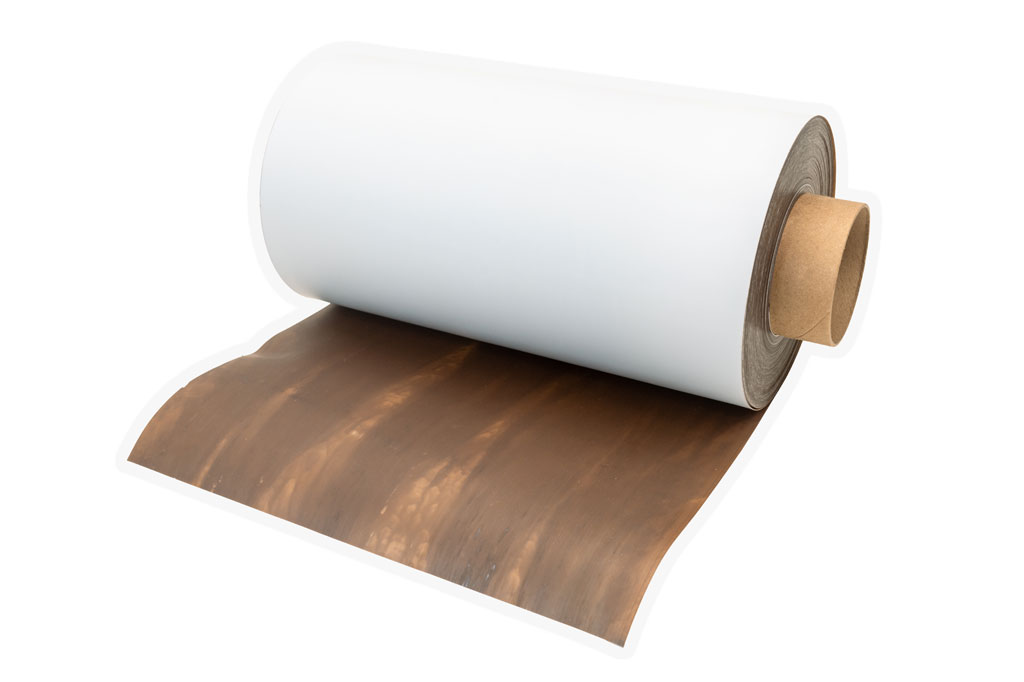
One of PTFE’s greatest advantages—its ultra-low surface energy—also presents a significant challenge: poor adhesion. Standard adhesives and coatings struggle to bond with PTFE unless the surface undergoes proper pretreatment.
Among various surface modification techniques, etching remains the most widely used method to improve the adhesion of PTFE film.
Why PTFE Film Requires Surface Etching?
PTFE has one of the lowest surface energies among engineering plastics, typically 18–22 mN/m, compared with 40–50 mN/m for most adhesives. The result is weak wettability, limited mechanical interlocking, and extremely poor chemical compatibility. Without surface treatment:
- Adhesives bead up instead of forming an even film
- Laminates delaminate easily under stress
- Coatings peel off
- Printing inks fail to anchor
Surface etching modifies the top few microns of PTFE, increasing surface energy, roughness, and chemical activity, enabling strong and reliable bonding.
How Surface Etching Works?
Etching involves exposing PTFE to a chemical solution that breaks carbon-fluorine (C–F) bonds on the polymer surface. This reaction removes fluorine atoms and replaces them with reactive functional groups such as:
- Hydroxyl (–OH)
- Carbonyl (C=O)
- Carboxyl (–COOH)
- Amine (–NH₂) (depending on the etching agent)
These new groups significantly increase surface energy, thus improving wetting, adhesive penetration, and chemical bonding.
Additionally, the micro-roughness formed during etching enhances mechanical interlocking between PTFE and adhesives.
4 Common PTFE Film Etching Methods
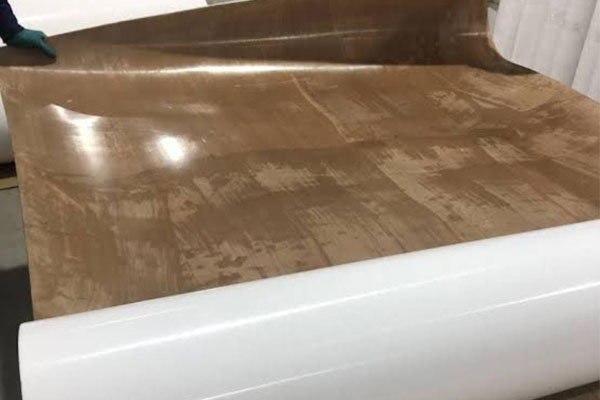
1. Sodium-Naphthalene Chemical Etching (Most Widely Used)
This is the gold standard for PTFE surface modification. A sodium-based etching solution reacts strongly with fluorine atoms on PTFE, forming a dark-brown modified surface that bonds exceptionally well with adhesives.
Process:
- PTFE film is cleaned and dried
- Immersed or brushed with sodium-naphthalene solution
- Rinsed to remove residual chemicals
- Dried and stored in a controlled environment
Advantages:
- Proven high adhesion strength
- Reliable and repeatable results
- Suitable for continuous roll-to-roll etching
Limitations:
- Requires strict safety protocols
- Etched surface has a limited shelf life and must be used promptly
2. Plasma Treatment (Environmentally Friendly Option)
Plasma etching uses ionized gas—such as oxygen, argon, or ammonia—to modify the PTFE surface. It is a clean, dry, and eco-friendly alternative to chemical etching.
Benefits:
- No hazardous chemical waste
- Good for electronics and medical devices
- Easy to integrate into manufacturing lines
Drawbacks:
- Surface activation may be less durable
- Requires precise control of gas composition
- Not as strong as sodium etching for demanding adhesive applications
3. Corona Discharge Treatment
Corona treatment is a low-cost, atmospheric-pressure technique commonly used for films and flexible packaging materials. It increases surface energy but has limited effectiveness on PTFE due to its extreme inertness.
Suitable for:
- Light adhesion improvements
- Printing applications
Less suitable for:
- High-strength structural bonding
4. Ion Beam and Laser Etching
These advanced methods offer precise control and uniformity, ideal for microelectronic or biomedical PTFE components.
Advantages:
- Very clean surface modification
- Ability to tailor micro-patterns
Disadvantages:
- High equipment cost
- Slow processing speed
Benefits of Surface Etching on PTFE Film
After etching, PTFE film exhibits significantly improved functional characteristics:
1. Substantially Higher Surface Energy
Surface energy can increase from 18 mN/m to over 60 mN/m, allowing adhesives, inks, and coatings to wet the surface evenly.
2. Stronger Adhesion and Bonding
Etched PTFE can achieve:
- 10–50× higher peel strength
- Stable long-term adhesion
- Reliable structural bonding to metals, rubber, textiles, and composites
3. Enhanced Compatibility with Adhesives
Etched PTFE bonds well with:
- Epoxies
- Polyurethane adhesives
- Acrylic adhesives
- Silicone adhesives
- Pressure-sensitive adhesives (PSA)
4. Improved Coating and Printing Performance
Surface etching enables:
- Anti-corrosion coatings
- Functional coatings (conductive, dielectric, hydrophilic)
- Digital and screen printing applications
5. Mechanical Interlocking
Micro-roughened surfaces ensure better bonding even under stress and vibration.
Applications of Etched PTFE Film
Because of its enhanced adhesion properties, etched PTFE film is used across many industries:
1. Electronics and PCB Manufacturing
- Bondable PTFE sheets for RF and microwave circuits
- Flexible printed circuit boards (FPCBs)
- Insulating layers in high-frequency applications
2. Aerospace and Defense
- Bonded composite structures
- Thermal and chemical barriers
- Lightweight, high-performance laminates
3. Medical Devices
- Catheter liners
- Implantable devices
- Diagnostic equipment components
4. Chemical Processing Equipment
- Bonded PTFE liners
- Anti-corrosion layers
- Gasket and sealing systems
5. Automotive
- Wiring insulation
- Fuel system components
- Heat shields
6. Adhesive Tape Manufacturing
Etched PTFE tape has strong backing-to-adhesive adhesion, used in:
- Heat-sealing machines
- Packaging lines
- Industrial sliding surfaces